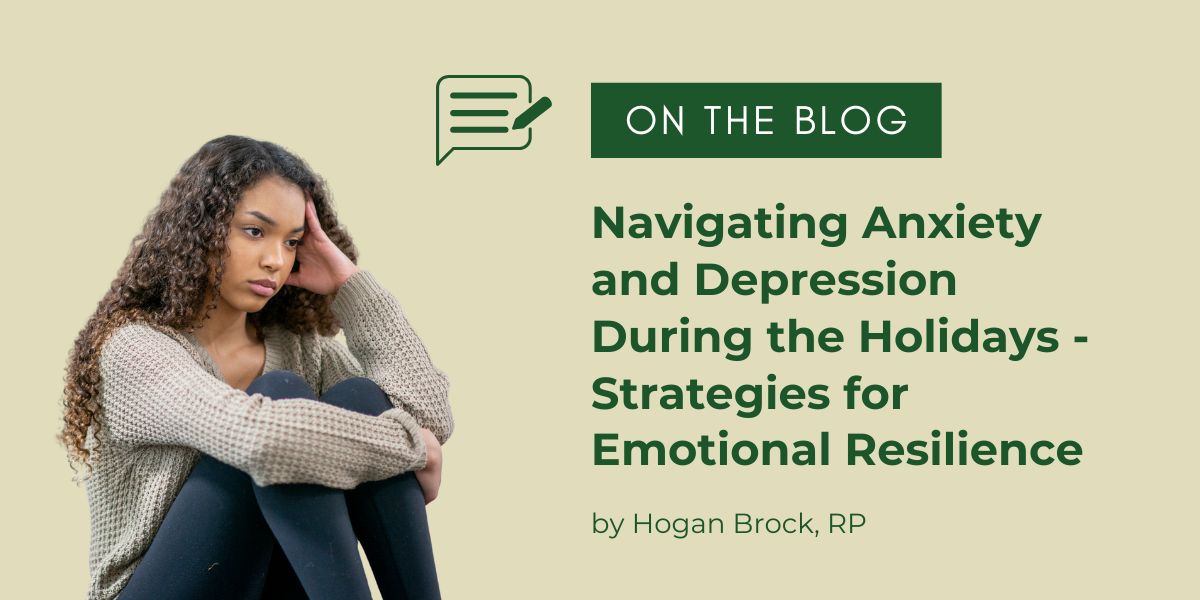
When seasonal joy feels heavy, here’s how to care for your mind and heart during the most wonderful—and sometimes hardest—time of year.
The Holiday Paradox
The holidays are often painted as a time of joy, connection, and warmth. But for many of us, this season can stir up deep anxiety, sadness, or loneliness. Between social expectations, family pressures, financial strain, and disrupted routines, it’s not uncommon to feel emotionally off-balance. This is especially true if there is distance, loss, or conflict within your family.
If you’re struggling to feel the “holiday spirit,” you’re not alone. Many people living with anxiety or depression find this time of year especially challenging. The goal isn’t to force cheerfulness or push through exhaustion—it’s to approach the season with gentleness, intention, and care.
Why the Holidays Can Feel Hard
There are many reasons the holidays can heighten anxiety or depression. Some are situational, others biological or emotional.
Social and emotional pressure – The expectation to be joyful can make sadness or disconnection feel even more stark. Family dynamics may be complicated, and the pressure to appear “okay” can leave little room for authenticity.
Financial stress – Gift-giving, travel, and gatherings can stretch budgets thin, increasing worry and guilt.
Grief and loss – For those who’ve lost loved ones to death or estrangement, the holidays can reopen wounds. Even if years have passed, absences can feel sharper this time of year.
Routine disruption – Sleep, eating habits, and exercise often fall out of rhythm during December. These small shifts can meaningfully affect mood and energy.
Seasonal changes – Shorter days, less sunlight, and colder weather can contribute to low mood and lethargy, especially for those prone to seasonal affective disorder.
Understanding these layers can help normalize your experience—it’s not a personal failing, but a real interplay between body, mind, and environment.
Signs You Might Be Struggling
Anxiety and depression can appear differently for everyone, but common signs include: ● Persistent low mood or a sense of emptiness
- Heightened irritability, restlessness, or worry
- Withdrawal from friends and activities
- Fatigue or loss of motivation
- Changes in sleep or appetite
- Difficulty concentrating or making decisions
- Feeling guilty for not “enjoying” the season
If your symptoms persist or intensify—especially if you experience thoughts of hopelessness or self-harm—it’s important to reach out for professional support. You don’t have to navigate this alone.
Strategies for Coping and Caring for Yourself
Below are some ways to navigate the holidays with more steadiness and self-compassion.
1. Set Realistic Expectations and Boundaries
Let go of “shoulds.” You don’t have to attend every gathering or find the perfect gift. Decide in advance what matters most to you, and allow yourself to say “no” when something doesn’t align with your energy or values. Protecting your emotional bandwidth is an act of self-care.
2. Keep a Gentle Routine
Try to maintain a few grounding habits—consistent sleep, balanced meals, movement, and quiet time. Structure can provide stability when everything else feels unpredictable. Even brief rituals, like a morning walk or journaling before bed, can help anchor your day.
3. Practice Mindful Self-Compassion
When hard emotions arise, notice them without judgment. Instead of “I shouldn’t feel this way,” try “It’s understandable that I feel overwhelmed right now.” This shift softens inner criticism and opens space for care. Breathing exercises (like box breathing or diaphragmatic breathing) or mindfulness apps can also help ground you in the present.
4. Connect in Meaningful, Manageable Ways
Connection doesn’t have to mean large social events. While these aren’t always avoidable, prioritize time with people who feel safe and restorative. Small, genuine interactions– a phone call, a walk with a friend, a quiet coffee— can be far more nourishing than trying to “keep up” socially.
5. Move, Nourish, and Rest
Gentle physical activity can ease symptoms of both anxiety and depression by supporting endorphin release and reducing rumination. Get outside and walk, even if it means bundling up! Eat regularly and choose foods that sustain energy. And remember: rest is productive too. Taking a break isn’t indulgent—it’s necessary.
6. Plan for Difficult Moments
Anticipate situations that might feel triggering or exhausting. Create small “escape hatches,” like a breathing break outside, a grounding playlist, or a pre-arranged check-in with a friend or family member. Knowing you have a plan can reduce anxiety before it starts.
7. Reach Out for Support
If you’re feeling stuck, therapy can offer perspective and tools for coping. Speaking with a therapist can help you understand your triggers and strengthen emotional resilience. Support lines and crisis services are also available 24/7 if you need immediate care.
A Shift in Perspective
The holidays don’t have to be perfect to be meaningful. It’s okay if your season looks quieter, slower, or more reflective than others’. Remember– you are not the only one feeling this way. Often, what we remember most isn’t the perfection of the day or event, but the moments of presence and authenticity within it.
When you allow yourself to approach the holidays with curiosity instead of pressure, you open the door to a gentler, more grounded experience.
Resources for Support
If you need additional help or ideas for self-care, consider exploring:
- Mindfulness apps: Insight Timer, Headspace, Calm
- Books: Self-Compassion by Kristin Neff; Lost Connections by Johann Hari
- Crisis support (Canada): Talk Suicide Canada – call or text 988 (available 24/7); call 911 for immediate support.
- Therapy at Sage Naturopathic Clinic
Closing Reflection
If you take one thing from this, let it be that you don’t need to face the holidays alone or perfectly. Anxiety and depression are not signs that you’re failing to “do the season right.” They’re signals inviting you to slow down, listen inwardly, and care for yourself with intention.
As you move through December, ask yourself: What would make this season feel a little gentler for me? Then, take one small step in that direction.
Book your discovery Call with Hogan today!
References
- Edwards, Scott. 2016. “Addiction and the Brain – Holiday Stress and the Brain.” Harvard Medical School.
- https://hms.harvard.edu/news-events/publications-archive/brain/holiday-stress-brain. Han, Areum, and Tae Hui Kim. 2013. “Effects of Self-Compassion Interventions on Reducing Depressive Symptoms, Anxiety, and Stress: A Meta-Analysis.” Mindfulness 14, no. 3 (September): 1553-1581. https://doi.org/10.1007/s12671-023-02148-x. Kishimi, Ichiro, and Fumitake Koga. 2018. The Courage to Be Disliked: The Japanese Phenomenon That Shows You How to Change Your Life and Achieve Real Happiness. Translated by Ichiro Kishimi and Fumitake Koga. N.p.: Atria Books.
- Thomas, Justin, and Fatme Al-Anouti. 2017. “Sun Exposure and Behavioral Activation for Hypovitaminosis D and Depression: A Controlled Pilot Study.” Community Mental Health Journal 54 (November): 860-865. https://doi.org/10.1007/s10597-017-0209-5.
- Webb, Jonice, and Christine Musello. 2012. Running on Empty: Overcome Your Childhood Emotional Neglect. N.p.: Morgan James Publishing.
Hogan Brock, RP
Sage Naturopathic Clinic