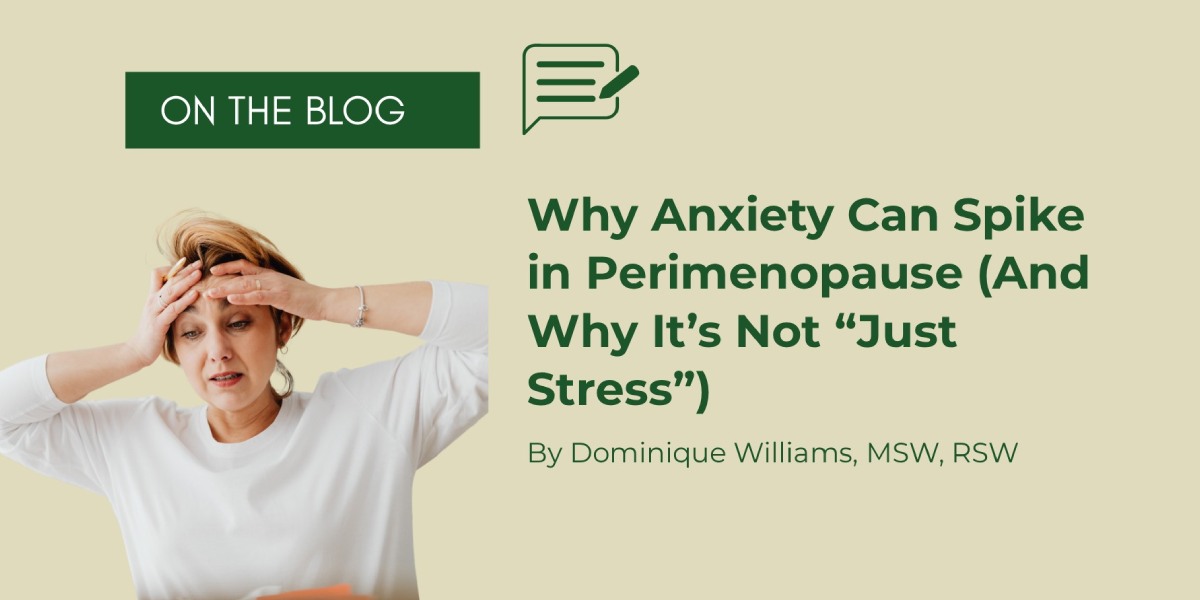
You wake up at 3:17 a.m., heart racing, mind spinning. You try to go back to sleep, but your thoughts won’t stop: the deadlines, the relationships, the “what-ifs.” By the time morning comes, you’re exhausted, irritable, and wondering: Is this just hormones? Or is something really wrong with me? If this sounds familiar, you’re not alone — and it’s not a sign of weakness, laziness, or a failing brain. What you’re experiencing is very common in perimenopause, the transitional years before menopause, when your body’s hormones are fluctuating in ways that affect sleep, mood, and nervous system regulation. Anxiety during this time isn’t just “stress” — it’s a predictable response to real physiological and cognitive changes.
Why Anxiety Can Spike in Perimenopause
Perimenopause brings changes that are subtle at first, then suddenly undeniable. One of the biggest shifts is in estrogen and progesterone levels. These hormones don’t just influence periods — they affect brain chemistry, sleep quality, and the stress response.
Hormones and the Brain
Estrogen has a protective effect on several neurotransmitters that regulate mood and anxiety. When estrogen fluctuates, these systems can feel out of balance. This can result in sudden mood swings, heightened emotional reactivity, or feelings of worry that feel uncontrollable. Many women will tell me they feel white hot rage when someone chews near them – that’s brain chemistry.
Sleep Disruption
Night sweats, hot flashes, and restless sleep are incredibly common. Even one poor night can leave you more sensitive to stress, less able to regulate emotions, and prone to rumination. Anxiety feeds on sleep deprivation, and sleep deprivation feeds anxiety — it’s a cycle that can feel relentless. Sleep disruption in perimenopause is one of the most common complaints I have in practice, you’re not alone!
Cognitive Vulnerability
Many women enter perimenopause with a history of anxiety, perfectionism, or disordered eating. Even if you’ve been doing well for years, the combination of hormonal change, life stressors, and disrupted sleep can trigger old patterns. The worry feels sharper, faster, and harder to contain.
It’s important to know that this is biologically understandable. Your nervous system is reacting to real signals, not imagined ones. You are not “overreacting” or “too sensitive.”
How Anxiety Shows Up Differently in Midlife
Perimenopausal anxiety doesn’t always look like the panic attacks or generalized worry that younger women might experience. It can feel subtler, and sometimes more confusing:
3 a.m. Wake-Ups with Racing Thoughts
You may find yourself awake, mind spinning, feeling suddenly panicked about tasks, finances, or health — and these anxious thoughts can linger throughout the day.
Health Anxiety and Fear of “Losing Control”
Many women notice hyper-awareness of bodily sensations. A skipped heartbeat, a hot flash, or a night of poor sleep can trigger catastrophic thoughts: “Is something wrong with my heart? Am I losing my mind?” These fears are distressing, but they are also a normal response to hormonal and physiological changes.
Irritability and Emotional Intensity
Things that used to feel manageable — an email from work, a comment from a partner — suddenly feel overwhelming. You might find yourself snapping or feeling unusually reactive, remember the chewing?
Body Image Distress or Return of Old Eating Patterns
Weight distribution changes, menopause-related bloating, and fatigue can make old body image concerns resurface. Women with a history of dieting, eating disorders, or body dissatisfaction often notice old patterns creeping back, such as rigid food rules, guilt after eating, or secretive behaviors around food.
Increased Overwhelm Despite High Functioning
Many women I work with are successful, organized, and capable — yet perimenopause anxiety can make them feel out of control. It’s not a reflection of ability; it’s a reflection of your nervous system working overtime. I like to describe it as your smoke alarm going off when your making toast, not when there’s a real fire.
Recognizing these patterns is the first step. Awareness allows you to respond with compassion instead of criticism. You are not failing — your body is simply asking for support.
What Actually Helps: Evidence-Based Support for Perimenopausal Anxiety
The good news is that perimenopausal anxiety is treatable. With the right strategies, you can feel steadier, more rested, and more like yourself again.
Cognitive Behavioral Therapy (CBT)
CBT helps you identify and challenge unhelpful thinking patterns, develop coping strategies, and regain a sense of control. For perimenopausal anxiety, CBT can target:
- Catastrophic thinking about health or sleep
- Overgeneralizing negative experiences
- Anxiety-driven behaviors that reinforce worry
CBT-I for Sleep Disruption
Insomnia is both a cause and a consequence of anxiety. Cognitive Behavioral Therapy for Insomnia (CBT-I) is a structured approach that addresses the thoughts and behaviors that perpetuate poor sleep, helping you reclaim restorative rest. It is now considered the “gold standard” for insomnia and is often prescribed by physicians.
Nervous System Regulation Skills
Simple techniques like paced breathing, grounding exercises, and gentle movement can help calm the nervous system in real time. Over time, these practices reduce baseline anxiety levels and increase resilience.
Body-Neutral, HAES®-Aligned Approach
Perimenopause often triggers body image concerns. Mid-life pressures, fluctuating hormones, and a body that doesn’t feel like your own anymore can result in disordered eating or restrictive dieting. A body-neutral approach — focusing on what your body can do rather than how it looks — reduces shame, guilt, and the anxiety that comes from self-criticism. Food, movement, and self-care become tools for wellness, not punishment.
Collaborative Care
Sometimes, anxiety is amplified by medical conditions or medications. Working with a healthcare team ensures that physiological contributors to anxiety are addressed alongside psychological strategies.
Taking Action: You Don’t Have to Navigate This Alone
Perimenopausal anxiety is not a sign of weakness — it’s a signal that your body and mind need support. Working with a therapist who understands both the physiological and psychological changes of this stage can make a profound difference.
If you’re waking up at 3 a.m., feeling out of control, or struggling with returning body image concerns, there are concrete steps you can take:
- Learn CBT techniques for managing worry and rumination
- Address sleep disruption with CBT-I strategies
- Practice nervous system regulation daily
- Engage with a therapist who understands HAES® principles, perimenopause, and your lived experience
Perimenopause is a natural transition — but it doesn’t have to mean months or years of anxiety. With evidence-based support, you can reclaim steady sleep, calmer days, and confidence in your body and mind.
If you’re ready to feel more grounded and like yourself again, you can book a consultation here
About Dominique Williams, MSW, RSW
Dominique Williams is a HAES®-aligned therapist specializing in CBT for perimenopausal women experiencing anxiety, insomnia, and body image distress. She helps women reclaim balance, rest, and confidence during life’s transitions.
Book your discovery call with Dominique today!
References
- Freeman EW, Sammel MD, Lin H, Nelson DB. Associations of hormone levels and vasomotor symptoms with depression during the menopausal transition. Arch Gen Psychiatry. 2006;63(4):375–382. doi:10.1001/archpsyc.63.4.375
- Thurston RC, Joffe H. Vasomotor symptoms and menopause: findings from the Study of Women’s Health Across the Nation. Obstet Gynecol Clin North Am. 2011;38(3):489–501. doi:10.1016/j.ogc.2011.05.011
- Perlis ML, Jungquist C, Smith MT, Posner D. Cognitive Behavioral Treatment of Insomnia: A Session-by-Session Guide. Springer; 2005.
- National Institute on Aging. Perimenopause and menopause: Overview and symptoms. https://www.nia.nih.gov/health/menopause
- Mayo Clinic. Menopause and anxiety: Why mood changes occur. https://www.mayoclinic.org/healthy-lifestyle/menopause/expert-answers/menopause-anxiety/faq-20058473
- Hein, M., & Gordon, A. (2020). The role of cognitive-behavioral therapy in treating anxiety disorders in midlife and beyond. Journal of Clinical Psychology, 76(12), 2413–2425.
Dominique Williams, MSW, RSW
Sage Naturopathic Clinic