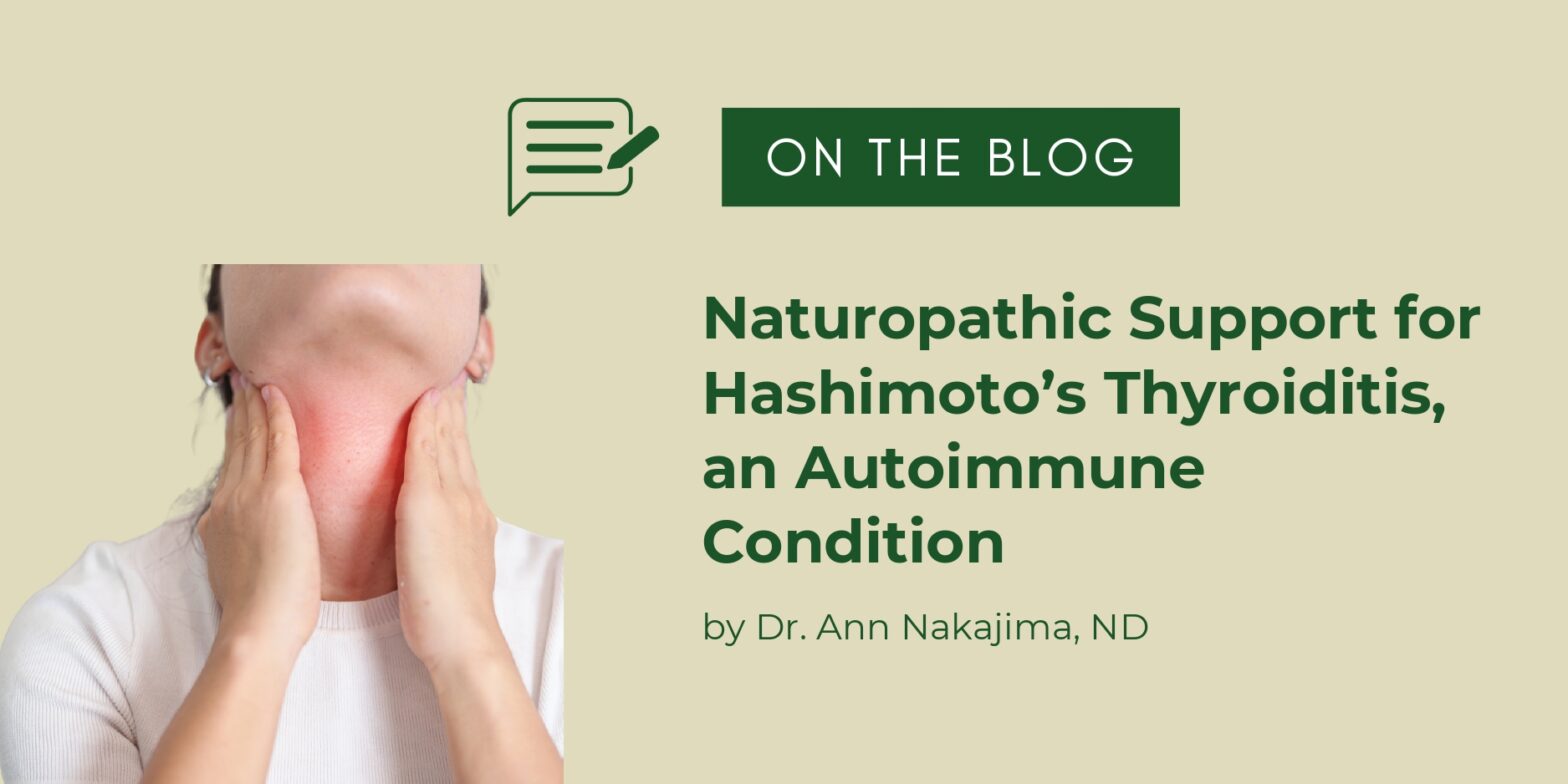
What is Hashimoto’s thyroiditis?
The thyroid is a key endocrine gland that regulates our metabolism and energy levels. It acts as a thermostat, controlling body temperature, heart rate, and how fast the body burns calories. In children, it plays a vital role in growth and brain development.
Hashimoto’s thyroiditis is a chronic autoimmune condition where the immune system produces antibodies that act like bullets and attack the thyroid gland in a similar fashion to how it would treat a foreign invader or an infection-causing microbe. An ongoing immune attack will result in
inflammation and damage of the gland. Over time it may not be able to produce enough thyroid hormone resulting in underactive thyroid function or hypothyroid symptoms.
The clinical picture of hypothyroidism includes:
- Fatigue and depressed mood
- Weight gain
- Cold intolerance
- Enlarged thyroid (goitre) which can result in local discomfort or difficulty swallowing
- Muscle aches
- Dry hair and hair loss
- Puffy face
- Constipation
- Heavy or irregular menstrual periods and infertility
Unique characteristics of Hashimoto’s thyroiditis
- In addition to the above hypothyroid symptoms, it is possible to experience hyperthyroid symptoms (e.g. heart palpitations and sweating, anxiety, and weight loss) in the early course of the disease as the initial immune attack may lead to the release of stored hormones into the blood.
- 20-30% of people with Hashimoto’s thyroiditis have thyroid nodules.
- 10-40% of people with Hashimoto’s thyroiditis may have gastric issues.
- 20% of people with autoimmune thyroid disease may also have other types of autoimmune disease.
How common is Hashimoto’s thyroiditis?
Hashimoto’s thyroiditis is one of the most common autoimmune conditions, and it is the main cause of hypothyroidism in developed nations. It occurs most commonly in women and is often diagnosed between 30-50 years of age. It also tends to run in families.
How is Hashimoto’s thyroiditis diagnosed?
Hypothyroidism is diagnosed by testing the thyroid hormones, Thyroid Stimulating Hormone (TSH) and Free T4 via blood work.
Ultrasound testing of the thyroid can be used to assess an enlarged thyroid or thyroid nodules.
Elevated levels of Thyroid peroxidase antibody and/or Thyroglobulin antibody on blood work are indicative of Hashimoto’s thyroiditis.
Considering that Hashimoto’s thyroiditis is the main cause of hypothyroidism, I am often surprised that many of my patients with hypothyroidism are not aware if they have Hashimoto’s or whether they have been tested for it. When I look over the blood work results from their medical doctors that they bring to their Naturopathic appointments so that I can review them from a preventative approach, I do not often see that these tests are run, and in my experience, they tend not to be routinely monitored in patients with Hashimoto’s.
These antibody tests are relatively inexpensive (when ordered by Naturopathic Doctors), and they play a valuable role in my clinical practice. I regularly order these tests when I first begin working with a patient with hypothyroidism and/or with a patient with possible autoimmune tendencies (chronic pain and/or fatigue, generalized inflammation, and/or other positive
autoimmune markers).
When these antibody markers are high in patients with normal thyroid hormone levels, I regard this as an ideal scenario to practice a preventative approach to try to put the brakes on the autoimmune process before it can cause damage to the thyroid.
So, what can we do for Hashimoto’s thyroiditis?
A conventional medical approach is to prescribe thyroid hormone medication called Levothyroxine when the thyroid hormone levels are in a hypothyroid range and to adjust the dosing if indicated on future blood work.
So, what can we do, as Naturopathic Doctors, to support an autoimmune thyroid condition?
Test for Nutritional Deficiencies and Optimize Nutrient Levels
- As digestive issues are commonly seen in patients with Hashimoto’s thyroiditis, iron deficiency can occur due to poor iron absorption. Low levels of iron can impact thyroid function and have been associated with increased thyroid antibody levels.
- Vitamin D deficiency has been associated with an increased prevalence of thyroid autoimmunity in certain populations, including children, adolescents, and overweight individuals.
- Selenium is a key nutrient in thyroid development in pregnancy and the management of thyroid function. Selenium is required in the conversion of T4 to T3 hormone, and it provides antioxidant support for the thyroid. Selenium supplementation has been found to lower thyroid antibody levels.
Support Gut Health
60-80% of the immune cells in the body are in the intestinal tract, which makes it the largest immune organ in the body! The intestinal microbiome or the community of bacteria that resides in the gut can play a role in regulating immune function. When the gut flora is out of balance, the immune system can become dysregulated. Inflammation of the intestinal lining can lead to increased intestinal permeability and the passage of undigested food particles and microbes from the intestinal tract into the blood stream resulting in generalized inflammation and unwanted immune reactions. There is a link between Celiac disease and Hashimoto’s; up to 10% of patients with Celiac disease may have autoimmune thyroid disease.
Consider an anti-inflammatory diet low in refined sugar, which can fuel unwanted microbial growth. Investigate for possible food triggers that could be contributing to one’s digestive symptoms. Anti-microbial herbs can be utilized to try to eliminate unwanted flora. We can also incorporate beneficial sources of flora, including fermented foods, to support immune and intestinal function while ensuring sources of dietary fiber to act as prebiotics to feed the good bugs.
Stress Management
Chronic stress and increased cortisol levels can downregulate thyroid hormones while also exacerbating inflammation and disrupting the gut-brain axis. Deep breathing, meditation, yoga, a regular sleep routine, and the use of calming adaptogenic herbs can all help to lower cortisol levels.
Reduce Environmental Toxin Exposure
The thyroid gland is like a canary in the coal mine and is susceptible to even low-level exposure to various chemicals and environmental pollutants. Plastic, BPA, flame retardants, heavy metals, and organochorine pesticides have been linked to thyroid cancer and autoimmune thyroid disease.
Book a discovery call or initial consultation with Dr. Ann to learn more about:
- Getting tested for thyroid antibody markers.
- How to improve your thyroid health even if you are already taking Levothyroxine (thyroid medication).
- How to prevent or support autoimmune thyroid disease.
Dr. Ann Nakajima ND
Naturopathic Doctor at Sage Naturopathic Clinic
References
Ragusa, F., Fallahi, P., Elia, G., Gonnella D., Paparo, S.R., Giusti, C., Churilov, L.P., Ferrari, S.M., Antonelli, A. (2019). Hashimoto’s thyroiditis: Epidemiology, pathogenesis, clinic and therapy. Best Pract Res Clin Endocrinol Metab. 33(6):101367. doi: 10.1016/j.beem.2019.101367
Cellini, M., Santaguida, M.G., Virili, C., Capriello, S., Brusca, N., Gargano, L., Centanni, M. (2017). Hashimoto’s Thyroiditis and Autoimmune Gastritis. Front Endocrinol (Lausanne). 26;8:92. doi: 10.3389/fendo.2017.00092
Garofalo, V., Condorelli, R.A., Cannarella, R., Aversa, A., Calogero, A.E., La Vignera, S. (2023). Relationship between Iron Deficiency and Thyroid Function: A Systematic Review and Meta-Analysis. Nutrients.15(22):4790. doi: 10.3390/nu15224790
Lebiedzinki, F., Lisowska, K.A. (2023). Impact of Vitamin D on Immunopathology of Hashimoto’s Thyroiditis: From Theory to Practice. Nutrients.15(14):3174. doi: 10.3390/nu15143174
Hu, S., Rayman, M.P. (2017). Multiple Nutritional Factors and the Risk of Hashimoto’s Thyroiditis. Thyroid. 27(5):597-610. DOI: 10.1089/thy.2016.0635
Frohlich, E., Wahl, R. (2019). Microbiota and Thyroid Interaction in Health and Disease. Trends Endocrinol Metab.30(8):479-490. doi: 10.1016/j.tem.2019.05.008