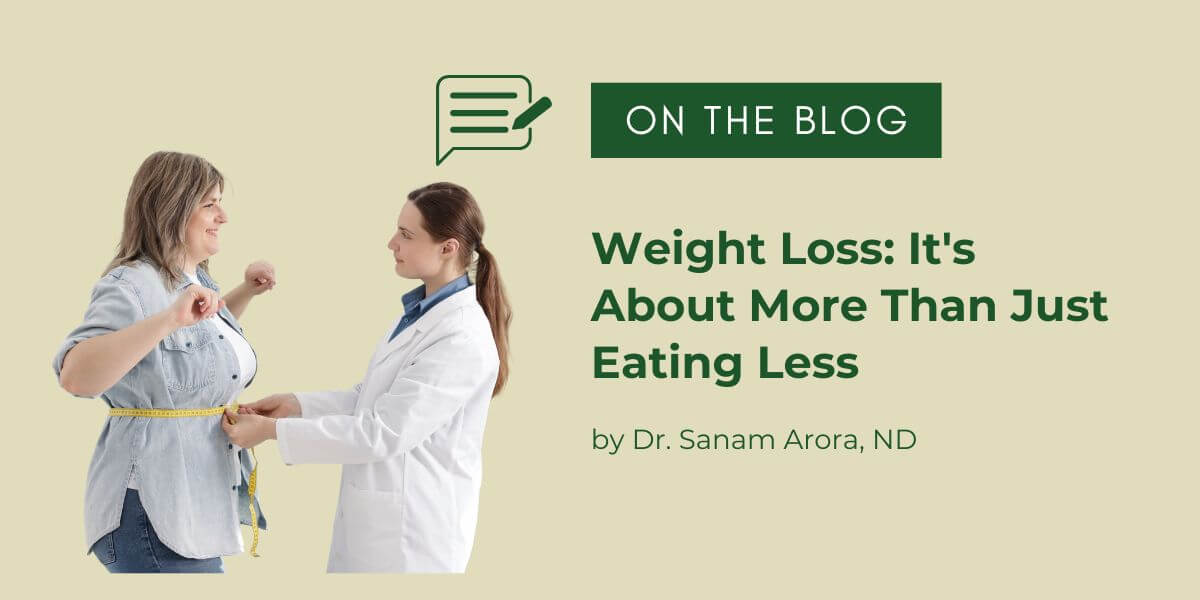
Many people try to lose weight by eating less food and exercising more, but they often feel frustrated when the scale doesn’t move or the weight comes back. As a naturopathic doctor, I help people understand why this happens. The truth is, weight loss is about much more than just counting calories.
Our bodies are complex. Many different things affect our weight, including our hormones, stress levels, sleep, gut health, and even the chemicals around us.
Your Hormones Control Your Weight
Hormones are special messengers in your body that tell it what to do. Several hormones affect your weight in important ways.
Insulin is a hormone that helps your body use sugar from food. When your body stops listening to insulin properly (called insulin resistance), your body makes extra insulin. This extra insulin tells your body to store more fat, especially around your belly. Eating less sugar and more fiber can help fix this problem.
Your thyroid is a small gland in your neck that controls how fast your body burns energy. When it doesn’t work well, your body burns energy more slowly. This means you might need to eat much less than other people to lose the same amount of weight.
Leptin is another hormone that tells your brain when you’re full. Sometimes your brain stops hearing this signal, so you feel hungry all the time, even after eating a big meal.
The Impact of Stress and Sleep on Weight
When you’re stressed for a long time, your body makes more of a hormone called cortisol. High cortisol makes you hungrier and stores more fat around your organs. People with high stress levels have a harder time losing weight, even when they eat the same food and exercise the same amount as others.
Not getting enough sleep also makes weight loss harder. When you sleep less than seven hours per night, your body makes more hunger hormones and less fullness hormones. Studies show that tired people eat about 385 more calories each day than people who sleep well. They also want more junk food.
How Gut Bacteria Impact Your Metabolism
Inside your stomach and intestines live trillions of tiny bacteria called your microbiome. These bacteria help you digest food. Research shows that people who are overweight have different types of bacteria than people who are lean.
Some bacteria are better at pulling calories out of your food. This means two people eating the exact same meal might get different amounts of energy from it, depending on their gut bacteria. Unhealthy gut bacteria can also cause inflammation in your body, which makes losing weight even harder.
Other Surprising Factors: Chemicals & Genetics
Some chemicals in plastics, lotions, and bug sprays can dysregulate your hormones and slow down your metabolism. Your genes also play a role. Some people’s genes make them feel hungrier or store fat more easily than others. This isn’t your fault—it’s just how your body works.
A Better Way to Lose Weight
When we understand all these different factors, we can create a better plan for weight loss. Instead of just eating less, here’s what helps:
- Eat whole foods that balance your blood sugar
- Get enough vitamins and minerals to help your thyroid work properly
- Find ways to manage stress, like meditation or herbs that help your body handle stress
- Make sleep a priority
- Eat foods that feed good gut bacteria, like yogurt and vegetables
- Avoid chemicals in plastics and processed foods when possible
Losing weight isn’t about being strong or going hungry. It’s about understanding your body and giving it what it needs to be healthy. When we fix the real problems causing weight gain, losing weight becomes easier and more natural.
The key is to remember that everyone’s body is different. What works for one person might not work for another. That’s why it’s important to look at all the factors affecting your unique body. If you’d like 1:1 support for weight loss, feel free to book a free discovery call with Dr. Sanam.
References:
1. Ebbeling, C. B., et al. (2018). Effects of a low carbohydrate diet on energy expenditure during weight loss maintenance. BMJ, 363, k4583. https://doi.org/10.1136/bmj.k4583
2. Ludwig, D. S., & Ebbeling, C. B. (2018). The carbohydrate-insulin model of obesity: beyond ‘calories in, calories out’. JAMA Internal Medicine, 178(8), 1098-1103. https://doi.org/10.1001/jamainternmed.2018.2933
3. Mullur, R., Liu, Y. Y., & Brent, G. A. (2014). Thyroid hormone regulation of metabolism. Physiological Reviews, 94(2), 355-382. https://doi.org/10.1152/physrev.00030.2013
4. Hewagalamulage, S. D., et al. (2016). Stress, cortisol, and obesity: a role for cortisol responsiveness in identifying individuals prone to obesity. Domestic Animal Endocrinology, 56, S112-S120. https://doi.org/10.1016/j.domaniend.2016.03.004
5. Spiegel, K., et al. (2004). Brief communication: sleep curtailment in healthy young men is associated with decreased leptin levels, elevated ghrelin levels, and increased hunger and appetite. Annals of Internal Medicine, 141(11), 846-850. https://doi.org/10.7326/0003-4819-141-11-200412070-00008
6. Taheri, S., et al. (2004). Short sleep duration is associated with reduced leptin, elevated ghrelin, and increased body mass index. PLoS Medicine, 1(3), e62. https://doi.org/10.1371/journal.pmed.0010062
7. Ley, R. E., et al. (2006). Microbial ecology: human gut microbes associated with obesity. Nature, 444(7122), 1022-1023. https://doi.org/10.1038/4441022a
8. Heindel, J. J., et al. (2017). Metabolism disrupting chemicals and metabolic disorders. Reproductive Toxicology, 68, 3-33. https://doi.org/10.1016/j.reprotox.2016.10.001
9. Locke, A. E., et al. (2015). Genetic studies of body mass index yield new insights for obesity biology. Nature, 518(7538), 197-206. https://doi.org/10.1038/nature14177
Dr. Sanam Arora, ND
Sage Naturopathic Clinic