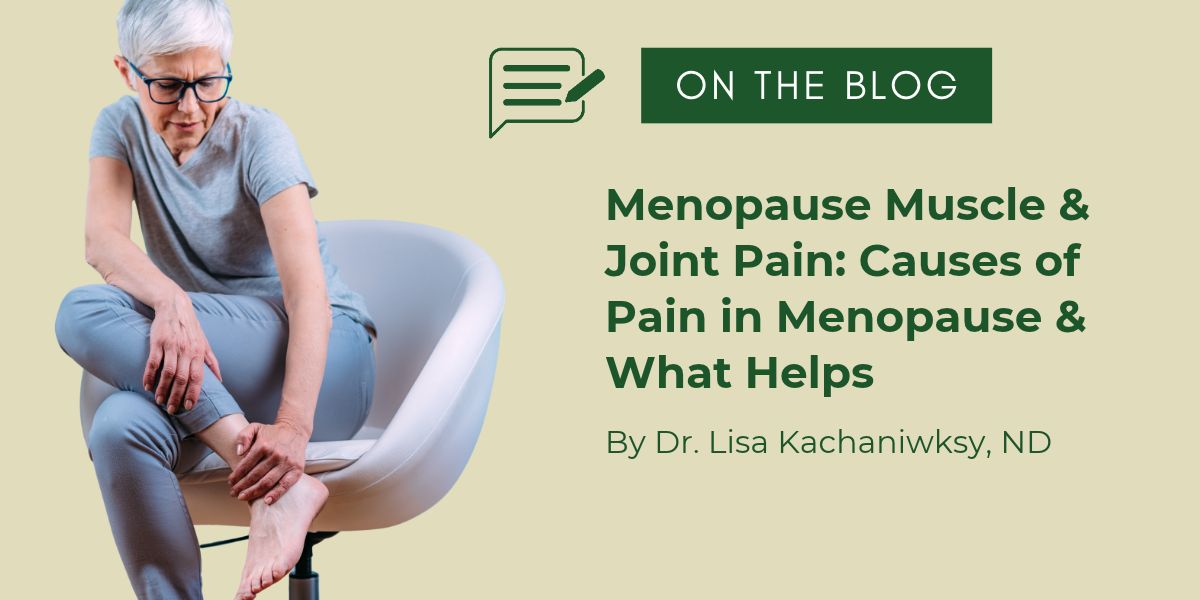
Why Do My Joints and Muscles Ache During Menopause?
Have you noticed that you suddenly feel stiff in the morning when you’re getting out of bed? Does it take more time for you to recover after physical activity? You might be assuming you’re just “getting older”, but the perimenopause transition may be part of the picture. While hot flashes, night sweats and changes in menstrual cycles are commonly associated with perimenopause, new joint and muscle pain are also frequently reported.
Are Joint Pain & Muscle Pain Symptoms of Menopause?
Research suggests that joint and muscle pain are common symptoms during the menopause transition. A 2026 systematic review and meta-analysis found that approximately 57% of perimenopausal women reported musculoskeletal pain, compared to 40% of premenopausal women.
Although the exact causes are still being investigated, hormonal fluctuations, particularly changes in estrogen, may contribute to these symptoms. Other factors, including aging, changes in physical activity, sleep disturbances, and underlying medical conditions, may also play a role.
It’s important to recognize that not every new ache or pain is caused by perimenopause. Conditions such as arthritis, autoimmune conditions, and injuries should also be considered when assessing persistent or worsening symptoms.
How Estrogen Affects Joints, Muscles & Inflammation
Estrogen does more than regulate the menstrual cycle. Estrogen receptors are found throughout the body’s muscles, joints, and connective tissues, where estrogen plays a role in maintaining their health and function.
One important function of estrogen is helping regulate inflammation. As estrogen levels fluctuate and decline during perimenopause, changes in inflammatory signaling may contribute to increased joint discomfort or stiffness.
Estrogen also influences cartilage, the smooth tissue that cushions your joints, and collagen metabolism, which is important for maintaining healthy tendons and ligaments.
Changes in these processes may affect how your joints and connective tissues respond to physical activity and everyday movement.
Muscle health can also be affected. Estrogen plays a role in muscle function and repair, and declining levels may contribute to changes in muscle strength and performance. Combined with age-related muscle loss, these changes can make maintaining strength and mobility more challenging.
Although these mechanisms may help explain why some women experience new or worsening musculoskeletal symptoms during perimenopause, research is still investigating the exact relationship between estrogen changes and pain.
How to Relieve Menopause Joint and Muscle Pain Naturally
Although joint and muscle pain can become more common during perimenopause and menopause, there are several ways to support your musculoskeletal health. Staying physically active, maintaining muscle strength, eating a balanced diet, and prioritizing recovery can all help support joint function and overall well-being.
Strength Training for Menopause Muscle & Joint Pain
Strength training becomes especially important during midlife, as hormonal changes and aging can contribute to a gradual decline in muscle mass and strength. Strong muscles help support and stabilize your joints, making everyday activities such as climbing stairs, lifting objects, and walking more manageable.
Aim to incorporate strength training at least twice per week, focusing on major muscle groups. Exercises using weights, resistance bands, machines, or body weight can all be effective. If you’re new to strength training or experiencing joint discomfort, start gradually and consider working with a qualified exercise professional.
Low-Impact Exercise for Stiff, Achy Joints and Tight Muscles
When your joints feel stiff or achy, it can be tempting to reduce physical activity. However, regular movement is important for maintaining joint mobility, muscle function, and overall physical health.
Low-impact activities such as walking, swimming, and cycling can complement strength training. Gentle stretching and mobility exercises may also help maintain flexibility and range of motion.
The key is finding activities that feel manageable and enjoyable. Start with shorter sessions if needed, and gradually increase your activity level as tolerated. If a particular
movement consistently worsens your pain, modifying the activity and seeking guidance from a professional may be helpful.
Protein Needs to Support Muscle and Joint Health in Menopause
Adequate protein intake is particularly important during perimenopause because protein provides the building blocks needed to maintain and repair muscle tissue. When combined with resistance training, adequate protein intake helps support muscle maintenance and function.
Including protein-rich foods throughout the day can help support muscle maintenance, especially when combined with resistance training. Good options include eggs, fish, poultry, Greek yogurt, tofu, beans, and lentils.
Sleep, Stress & Recovery: Hidden Factors in Muscle & Joint Pain
Joint and muscle discomfort can also be influenced by factors beyond hormonal changes. Poor sleep, ongoing stress, smoking, alcohol consumption, and inadequate recovery may all affect how your body feels and responds to physical activity.
Sleep is particularly important because disrupted sleep can increase pain sensitivity and make existing discomfort feel more pronounced. Unfortunately, sleep disturbances are also common during perimenopause, sometimes creating a cycle of poor sleep and increased discomfort. Your naturopathic doctor can help support your sleep with lifestyle adjustments, evidenced based supplement recommendations, and hormone therapy if indicated.
Prioritizing consistent sleep, managing stress, staying physically active, and eating a balanced diet rich in vegetables, fruits, whole grains, healthy fats, and protein can support overall health.
Best Supplements for Menopause Muscle & Joint Pain
Certain supplements may also play a supportive role in managing joint and muscle discomfort during perimenopause. Omega-3 fatty acids, found in fish oil, have anti-inflammatory properties and may help reduce joint pain and stiffness, particularly in individuals with inflammatory joint conditions. Curcumin, glucosamine and chondroitin supplementation can improve joint pain in osteoarthritis. Vitamin D is important for maintaining bone and muscle health, and correcting a deficiency may help improve muscle aches or weakness when low vitamin D levels are contributing to symptoms.
However, supplements are not a replacement for regular physical activity, adequate nutrition, or investigating persistent pain. Supplement choices should be individualized
with the help of your naturopathic doctor based on symptoms, medical history, lab tests, and potential medication interactions.
Can Hormone Therapy Help Menopause Joint Pain?
Because estrogen influences joint and muscle tissues, researchers have investigated whether hormone therapy can help alleviate musculoskeletal symptoms. Some studies suggest that estrogen therapy may modestly reduce joint pain. However, the evidence remains mixed, and hormone therapy is not currently recommended solely for treating
joint pain. Hormone therapy is appropriate for many women experiencing other perimenopause symptoms, but treatment decisions should consider individual symptoms, medical history, age, timing of menopause, and potential risks and benefits.
If you’re experiencing persistent joint or muscle pain during perimenopause, your Naturopathic Doctor can help you decide if hormone therapy is a good option for you.
Supporting Your Muscle & Joint Health Through Menopause
Although musculoskeletal symptoms may become more common during perimenopause, maintaining strength, mobility, and joint health is possible throughout this stage of life. Regular resistance training, staying physically active, meeting your nutritional needs, and prioritizing recovery are all important strategies for supporting long-term musculoskeletal health.
If you’re experiencing persistent or worsening joint or muscle pain, working with a Naturopathic Doctor can help investigate potential contributing factors and develop an individualized approach to managing your symptoms. Taking a proactive approach during perimenopause can help you maintain strength, confidence, and mobility for years to come.
Book a discovery call with Dr. Lisa to learn more!
References
- Kruse et al. Musculoskeletal Manifestations of Perimenopause: A Systematic Review and Meta-Analysis of 93,021 Women. JBJS Open Access. 2026. https://pmc.ncbi.nlm.nih.gov/articles/PMC12784006/
- Chlebowski RT, Cirillo DJ, Eaton CB, et al. Estrogen alone and joint symptoms in the Women’s Health Initiative randomized trial. Menopause. 2013;20(6):600–608. https://pubmed.ncbi.nlm.nih.gov/23511705/
- Gonzalez-galvez N, Moreno-Torres JM, Vaquero-Cristobal R. Resistance training effects on healthy postmenopausal women: a systematic review with meta-analysis. Climacteric. 2024. https://pubmed.ncbi.nlm.nih.gov/38353251/
- Loannidou P, et al. Analysis of combinatory effects of free weight resistance training and a high-protein diet on body composition and strength capacity in postmenopausal women—a 12-week randomized controlled trial. Journal of Nutrition, Health & Aging. 2024;28(10):100349. https://pubmed.ncbi.nlm.nih.gov/39232439/
- Impact of type and dose of oral polyunsaturated fatty acid supplementation on disease activity in inflammatory rheumatic diseases: a systematic literature review and meta-analysis. 2022. https://pubmed.ncbi.nlm.nih.gov/35526074/
- Bideshki MV, Jourabchi-Ghadim N, Radkhah N, et al. The efficacy of curcumin in relieving osteoarthritis: a meta-analysis of meta-analyses. Phytother Res. 2024;38(6):2875–2891. https://pubmed.ncbi.nlm.nih.gov/38576215/